Choose an application
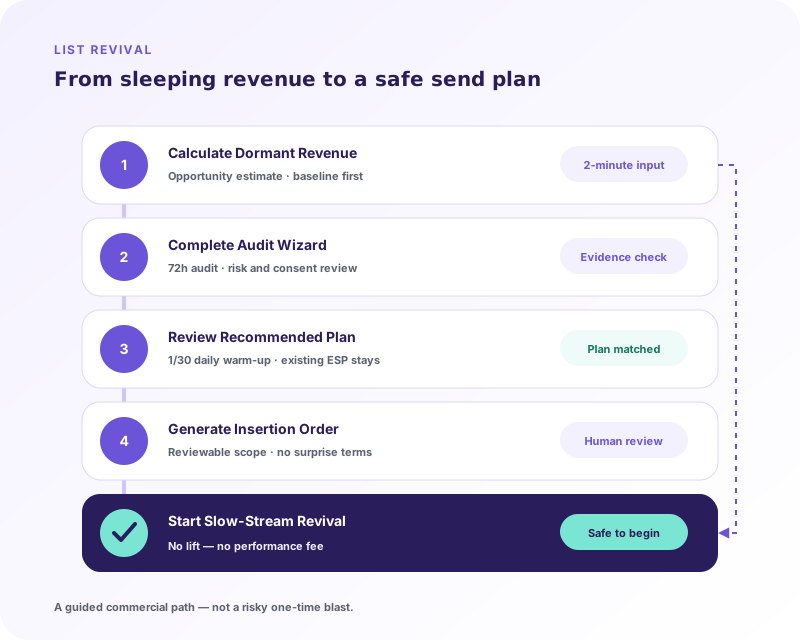
Recover a permissioned dormant audience through eligibility checks, gradual sending and reviewed stop conditions. Best for: teams facing inactive contacts, declining engagement and deliverability risk. It combines Manactor, Live Marketing Status and Trigger Processor; the audit establishes what should be excluded before a pilot begins.
Trigger the next useful onboarding action after registration while intent is current. Best for: products where people sign up but fail to reach first value. Zero Day Planner, Lifecycle Stage Trigger and Decision API connect the registration event to an eligible next step rather than a fixed broadcast.
Check suppression, contact pressure and risk before a campaign reaches its launch queue. Best for: operators who need a consistent pre-send control. Live Marketing Status and Trigger Processor help prevent an outdated audience export from overriding a newer unsubscribe or bounce.
Connect duplicate identities while retaining distinct brand subscriptions and permissions. Best for: portfolios whose brands and domains hold fragmented records of the same person. Unified Profile Graph, Live Status and the Consent Layer provide shared context without turning one brand's subscription into another brand's permission.
Turn underused and fragmented email assets into a defined opportunity with a measurable starting cohort. Best for: teams evaluating whether dormant-list recovery justifies operational cost. List Revival, Intelligent Planners and the Event Timeline connect decisions to subsequent actions and revenue evidence.
Build a reusable decision waterfall across the customer journey. Best for: teams whose campaign logic is scattered across tools and owners. Decision API, Intelligent Planners and Data Intelligence Framework connect current data to consistent eligibility and selection rules.
How the pieces fit
Every application uses the same order of checks: validate the profile, confirm consent, inspect current status, apply frequency limits, select an action, then send or suppress. A later step cannot make an ineligible profile eligible. A qualifying event may change the next decision, but it does not erase a prior suppression.
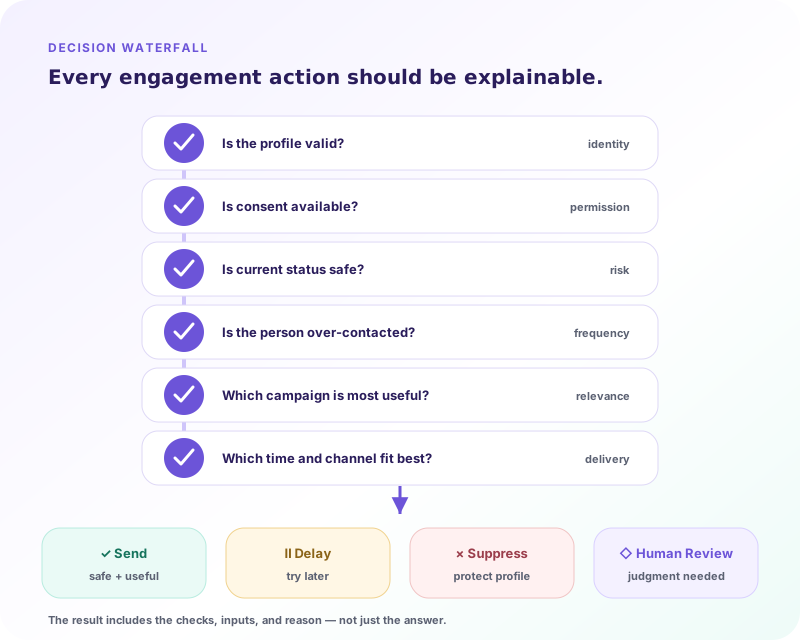
The platform explains the underlying components. Implementation Services connects the necessary systems, defines event and permission mappings and verifies the first application. Keep the first rollout narrow enough to inspect individual decision reasons and compare results against the agreed baseline.
FAQ
Which application should we start with?
Start with List Revival, the recommended entry application on our home page, when you have a permissioned dormant audience; the free audit helps establish whether that audience is suitable for a measured pilot.
Can applications run on our existing ESP?
Yes. The decision layer is designed to work with the existing email service provider; implementation scopes the integration, available events and execution controls for your stack.
How are applications priced?
List Revival has public application pricing on its page; the other applications are scoped after discussion of the workflow, data connections and operating requirements.
What does the free audit cover?
The free List Health Audit reviews list context, engagement and sending risk to identify a responsible next step; it does not promise recovery, inbox placement or a production send.
Start here
Check the sender requirements tracker, then use the List Revival playbook to define the first eligible cohort. Model a range of assumptions with the calculator, and measure the pilot before extending its rules to a broader audience.